Your 20s are the most powerful decade for money, even though it rarely feels that way. Income is often low, expenses feel high, and retirement seems impossibly far off. Yet the habits you build now compound for the rest of your life.
Budgeting in your 20s simply means giving your money a plan while the stakes are still small and the time horizon is huge. Get it roughly right now and you buy yourself decades of compounding, freedom, and far less stress later.
This guide covers why this decade matters so much, how to build your first budget, the money habits worth starting today, and the mistakes that trip up most young adults. You will see a worked example of investing early and an FAQ. Start applying it this week.
Why Budgeting in Your 20s Matters So Much
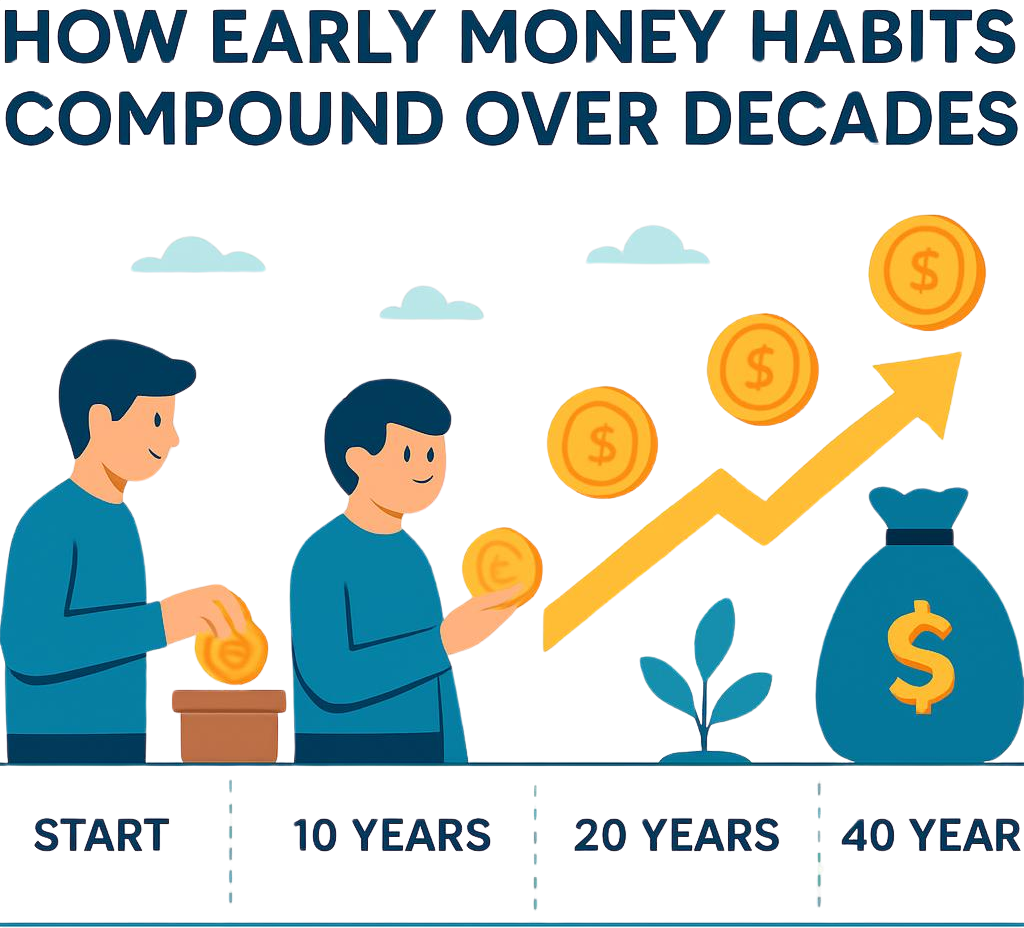
Time is the one advantage you will never have more of than right now. Money invested in your 20s has 40 years or more to grow, which means small amounts today can outweigh large amounts saved later. This single fact makes your 20s your wealthiest decade in potential.
Habits matter just as much as math. The spending and saving patterns you set now tend to stick. Learning to budget while your life is simple makes it far easier to handle a bigger income, a family, and a mortgage down the road.
How to Build Your First Budget
A first budget does not need to be complicated. The popular 50/30/20 framework gives most young adults a clean starting point: half your take-home pay for needs, a third for wants, and a fifth for savings and debt.
| Category | Share | Examples |
| Needs | 50% | Rent, food, transport, bills |
| Wants | 30% | Dining out, hobbies, travel |
| Savings and debt | 20% | Emergency fund, investing, loans |
Adjust the percentages to your reality. High rent in a big city may push needs above 50 percent, which simply means trimming wants for a while. The framework is a guide, not a cage. The point is that every dollar gets a job.
Money Habits to Start in Your 20s
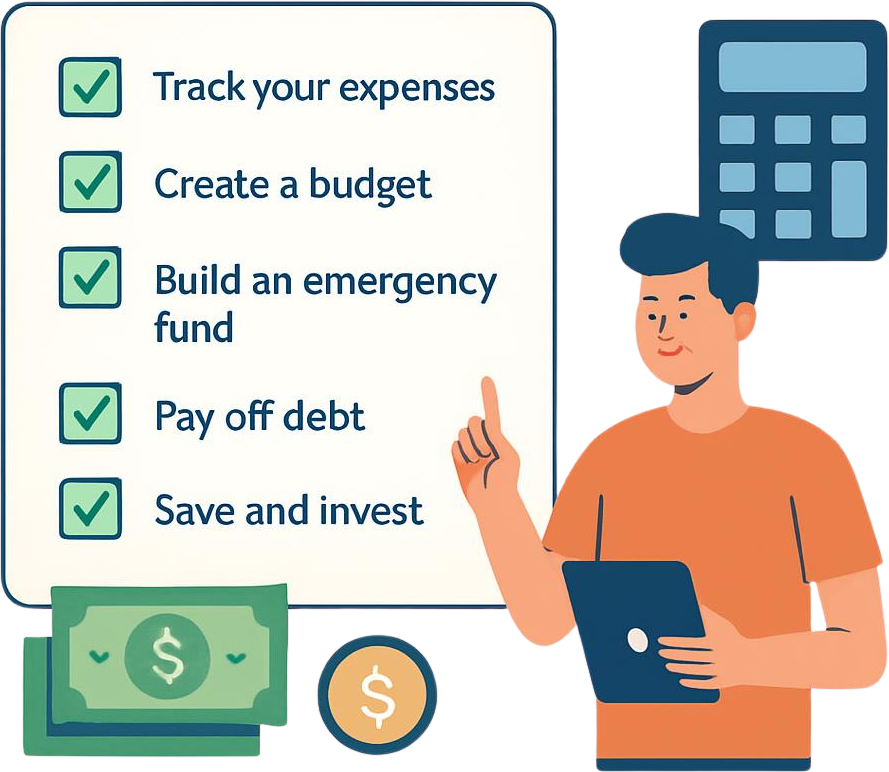
A handful of habits, started early, do most of the heavy lifting. Build these now and your future self inherits a strong financial foundation.
- Track your spending for one month to see where money really goes
- Build a starter emergency fund of $1,000 as fast as possible
- Start investing early, even $50 a month, to harness compounding
- Pay off high-interest debt before it snowballs
- Avoid lifestyle creep when your income rises
- Build your credit score with on-time payments
Tip: Automate everything you can. Set savings and investing to happen on payday so good habits run without willpower.
Worked Example: The Power of Starting Early
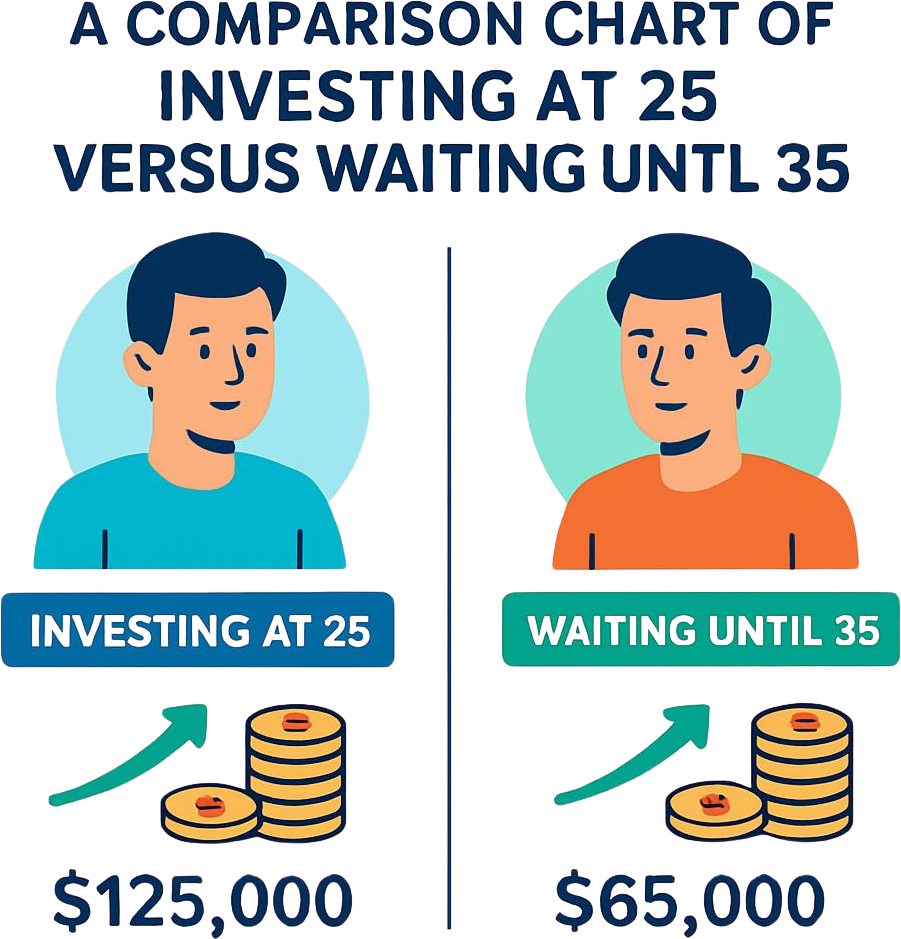
Picture two friends. One invests $200 a month starting at 25, the other waits until 35 to begin the same amount. Both earn an average 8 percent return and stop at 65.
The early starter invests for 40 years and ends with roughly $700,000. The late starter invests for 30 years and ends with about $300,000, despite contributing only $24,000 less. That $400,000 gap came almost entirely from ten extra years of compounding. This is why budgeting in your 20s, even on a small income, pays off so dramatically.
Common Money Mistakes to Avoid
The biggest mistake is waiting to start because the amounts feel too small. Small is exactly the point in your 20s, because time does the heavy lifting. Another trap is lifestyle creep, where every raise gets spent instead of saved.
High-interest debt is the third danger. Credit card balances can quietly erase years of progress. Clearing them early, and avoiding new ones, protects the compounding you are working to build.
Start Budgeting in Your 20s Today
Write down your monthly take-home pay and split it with the 50/30/20 method tonight. Open a savings account, automate a small transfer, and start a tiny investment even if it is only $50 a month.
Budgeting in your 20s is not about restriction, it is about building a foundation while time is firmly on your side. The small habits you start this week compound into freedom later, and the best moment to begin is right now.
Moniply AI Coach Upgrade
Make this 20s budget guide practical this week
Reading about budgeting is useful, but the result comes from turning the idea into one simple weekly routine. In your 20s, the goal is not a perfect budget. The goal is to know what comes in, what goes out, and what one money habit you will improve next.
Your next action plan
- Write down your expected income for the month after tax and deductions.
- List fixed bills first: rent, transport, phone, subscriptions, debt payments, and insurance.
- Choose one flexible category to control this week, such as food delivery, shopping, or entertainment.
- Set one small automatic saving amount before spending the rest.
- Review your actual spending every Sunday for ten minutes and adjust early.
AI Coach Tip: Start with cash flow, not perfection
Your first budget should answer one question: will money remain after bills, spending, savings, and debt? Once that number is visible, Moniply can guide your next best step.
Turn this article into a monthly budget
Start with income, fixed costs, flexible spending, and one savings target. Then review your numbers in the dashboard.
Get the Moniply AI Finance Coach app
Moniply is building an Android app that turns budgeting, savings, debt payoff, and money decisions into simple AI-guided next steps.

Author: M.Adil
Finance professional and Moniply founder. Moniply helps everyday people use simple tools, practical guides, and AI-style money coaching to budget, save, and make calmer financial decisions.